
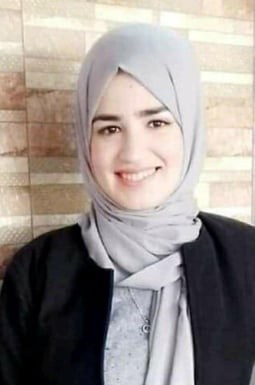
Nadia Arrousse
School - SSE Employment Status - Full-time Office - Building 6,105 Office hours - TR: 11:30-13:00 /16:00-19:00 Office extension - 2146Nadia Arrousse is an Assistant Professor of Chemistry in the School of Science and Engineering at Al Akhawayn University in Ifrane, where she has taught since January 2024. She earned her PhD in Applied Physical Chemistry in 2021 from Sidi Mohamed Ben Abdellah University in Fez, after completing a master’s degree in the Chemistry of Bioactive Molecules and a bachelor’s degree in Analytical Chemistry. Before joining AUI, she worked in Portugal, first as a postdoctoral researcher at the University of Minho on the ecological metallization of plastics by physical vapor deposition, and then as a researcher at the University of Aveiro. She currently leads two funded projects: “Multilayer Biofilter System (MSL) for Wastewater Treatment and Digital Monitoring in Africa,” supported by the AFRETEC Network, and another project on the green synthesis of magnetite nanoparticles from potato peel extract for water treatment. She has published more than 65 articles and two book chapters, with an H-index of 28, and reviews for journals including the Journal of Molecular Structure, the Journal of the Taiwan Institute of Chemical Engineers, Coatings, and Materials. She was selected as a TWAS Arab Young Affiliate for 2023–2028 and held a Marie Curie scholarship at the University of Helsinki. Her teaching interests include general chemistry (CHE 1400, CHE 1401, and CHE 1402).
She is particularly interested in teaching that connects classroom chemistry to real industrial problems, giving students hands-on experience with electrochemical instrumentation early in their studies, and supervising undergraduate and master’s research projects that produce publishable results. Her research focuses on corrosion and the protection of metal surfaces. She studies how organic molecules attach to metals and slow corrosion, drawing candidates from synthesized compounds, plant extracts, drug molecules, and industrial by-products. She works at three levels simultaneously: electrochemical measurement (polarization and impedance spectroscopy), surface analysis (SEM-EDX, AFM, XPS, and contact angle), and computational modeling using DFT, molecular dynamics, and Monte Carlo simulations.
She also works on protective coatings deposited by physical vapor deposition and on the green synthesis of nanomaterials for water treatment, which is the subject of her two current projects. Her wider interest is in turning waste streams into useful chemistry, using materials that industry currently pays to destroy as starting points for low-cost, low-toxicity corrosion inhibitors and using computational screening to identify the most promising candidates before laboratory testing.